What you'll learn View contents
What an N-number actually is
It is your aircraft's identity in the largest aircraft register in the world.
The letter N belongs to the United States, the same way G belongs to the United Kingdom and D to Germany. Every aircraft on the US register has one, from a training Cessna to an airliner.
You will say it out loud more than almost anything else you say in an aircraft. Every radio call, every clearance, every handoff.
The rules behind the format
After the N you get one to five characters, and the FAA is strict about which ones.
- →The first character after the N is a digit from 1 to 9. There are no leading zeros.
- →The letters I and O are never used, because they are too easily confused with 1 and 0 over the radio.
- →Numbers N1 through N99 are held back for the FAA's own use, so nobody else can have them.
- →You can have five numbers, up to four numbers plus one letter, or up to three numbers plus two letters.
Most aircraft end up with four or five characters, because that is what the FAA hands out when nobody asks for anything specific.
Why short numbers are prized
Because you have to say it, hundreds of times.
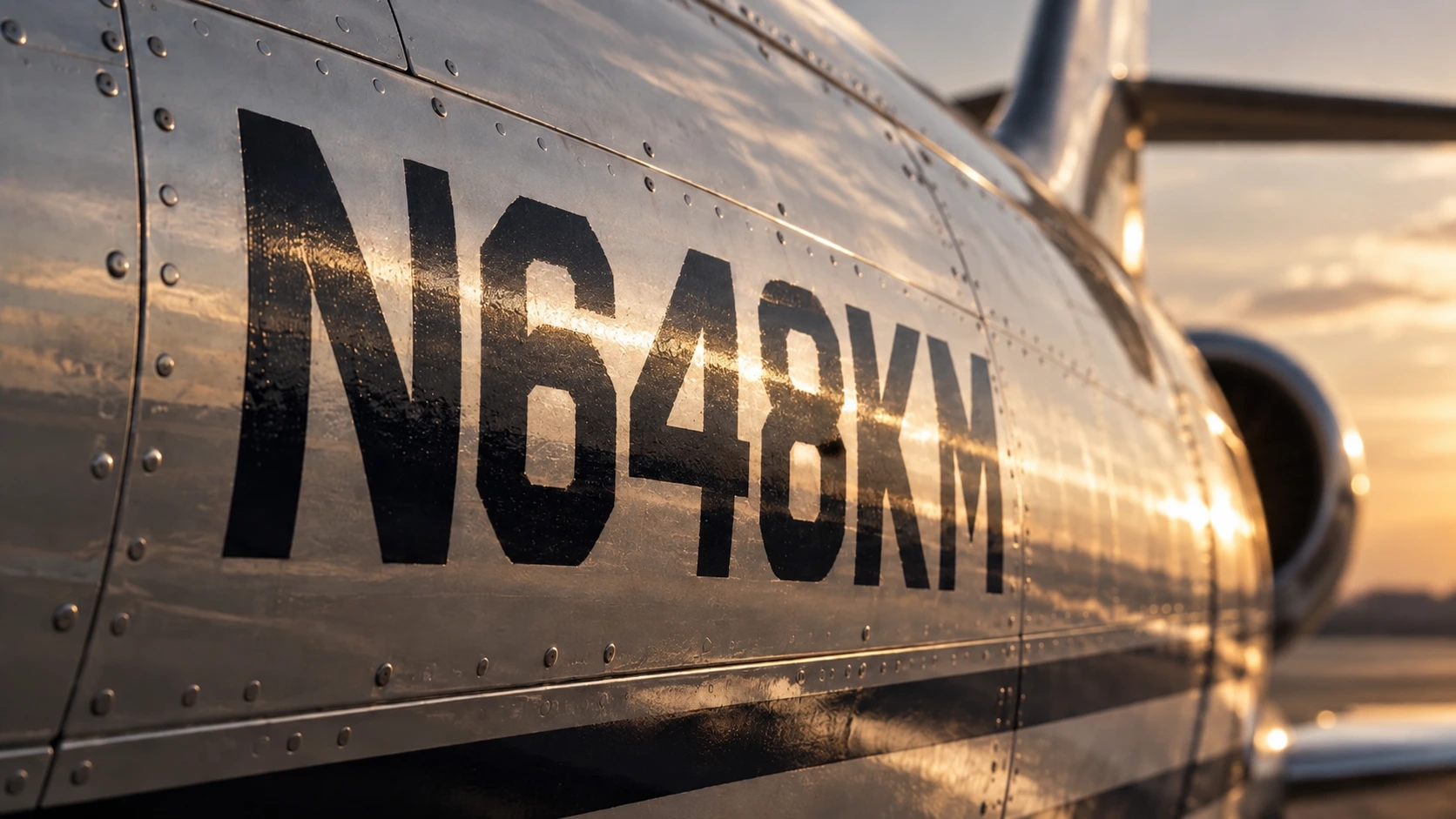
A short number like N1A is quicker to say, easier for a controller to hear correctly, and looks cleaner on the aircraft.
You cannot buy and sell an N-number the way you would a car. What you can do is hold one in reserve, and then release it to someone else in writing. The FAA charges about $10 a year to hold a number, and money sometimes changes hands privately between the two people either side of that release. Short, memorable numbers are the ones people go after.
It is one of the few parts of owning an aircraft that is purely about taste.
Can I choose my own?
You can ask for a specific number, but who is allowed to reserve one follows the same rules as registration.
The FAA lets you check what is free and hold a number, usually for $10 a year. But holding a number is generally limited to the same people who can register an aircraft directly: US citizens, permanent residents, and certain US entities.
This catches international owners by surprise. In practice it gets handled as part of setting up your registration rather than by you personally, so you can usually still get the number you want. Ask early rather than after filing, because good numbers get taken.
“Owners are often surprised they can have a say in their tail number at all. It is a small thing, but it is their aircraft, and it should feel like it.”
Thinking about a specific tail number for your aircraft? Mention it when you get in touch.
Ask for a quoteWhy flying under an N-number is worth it
The advantages are practical rather than symbolic.
- →You can sell it to more people. The United States is the biggest used aircraft market in the world, and an N-registered aircraft can be sold into it as it is, with no deregistration or import work for the buyer to pay for.
- →You can fix it anywhere. FAA mechanics, parts, and paperwork are available almost everywhere you are likely to fly.
- →Easier to finance. Who owns what, and who is owed money on it, is all recorded publicly in one place in the US. Many lenders prefer that, and some ask for a US registration before they will lend on an aircraft owned abroad.
- →Everyone knows it. Wherever you land, people recognise an N-number.
Keeping it current
FAA registration is renewed every seven years, not every three.
A lot of owners get this wrong, partly because the rule changed and old advice is still floating around online. If your registration runs out, the aircraft can be grounded until you fix it.
If your aircraft is in a trust with us, we watch that date and refile it for you. You do not need to remind us.
Published